Exhibit on Mountaineering Book Collection Set to Open on September 25
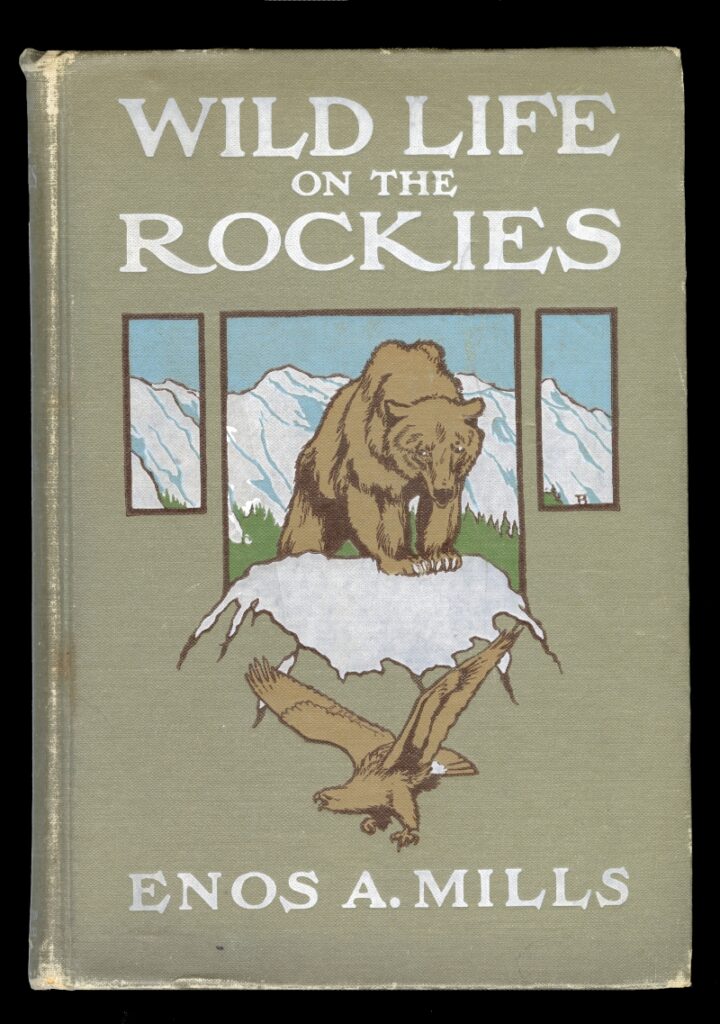
Manuscripts, Archives, and Special Collections (MASC) will kick off the fall semester with an exhibit on one of its newest collections, rare mountaineering books donated in June 2025 by WSU alums and renowned mountain climbers John Roskelley and Chris Kopczynski.
Both men will discuss the collection and mountaineering, their WSU connection, and more at a reception and open program on Friday, September 25, in the MASC lobby of the ground-floor Terrell Library atrium. They will also sign copies of their own books.
Titled “Peak to Page: Exploring the World of Mountaineering through Rare Books,” the exhibit will feature several of the collection’s 350 important works on mountaineering published between 1892 and 2012, first gathered by Roskelley and Kopczynski’s mentor and celebrated mountaineer, Joe Collins. MASC will also showcase newsletters from WSU’s Alpine Club, a student rock-climbing organization, from the 1970s.
To learn more about the collection, see the August 2025 story written by Will Gregg, MASC interim head, and a more recent story by Adriana Janovich from Washington State Magazine, which is co-organizing the exhibit reception and program.
‘Dogged in his pursuit’
For Roskelley and Kopczynski, climbing the world’s most challenging peaks started with the first step: joining the Spokane Mountaineers in 1965. There, the two met Collins, who eventually sent the pair on to their expeditions with books to get autographed by the legendary authors who peopled Collins’ mountaineering collection.
“He was dogged in his pursuit of signatures. Many of the volumes in the [libraries’] archives now would not be there without his determination,” Roskelley said. “But a great deal of the credit for rescuing these books goes to Chris, as he bought the collection from Joe before he died.”
Kopczynski said at an introductory meeting, Collins presented a slideshow capturing the outdoors and the Spokane Mountaineers. The photos “crystallized my decision to try and climb the world’s greatest mountains.
“I never looked back from that day forward. John and I were able to climb with Joe for many decades,” he said.
Roskelley characterized Collins as more of a “photographer/explorer.” He enjoyed weekends climbing throughout the Pacific Northwest and Canada with a select group of friends, which eventually included Roskelley and Kopczynski. For the most part, his travels and climbs were all about photography. Collins taught them 10 basic rules of taking photos.
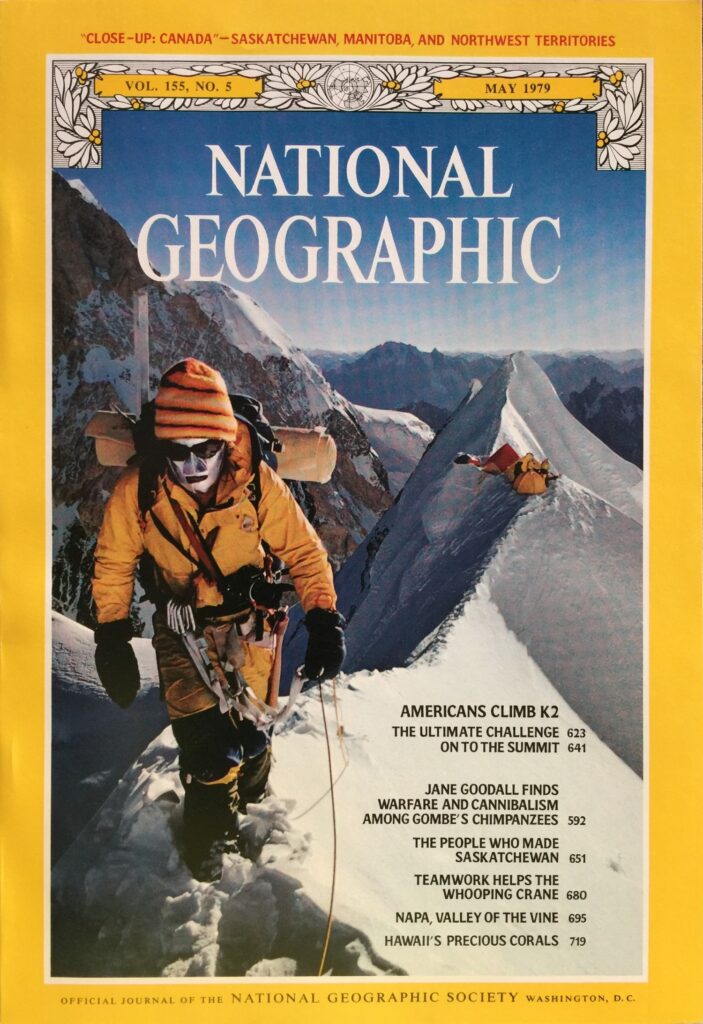
“In that, he was a master,” Roskelley said. “I credit his tutorials over many long drives to peaks throughout the Pacific Northwest for my success in taking the cover photo of the May 1979 National Geographic Magazine.”
Two mountain-crazy teens
Roskelley met Kopczynski on a climb of Mt. Shuksan in the north Cascades. The teens had other partners they chose to climb with for the first few months of joining Spokane Mountaineers. But on Shuksan, they bonded because both outpaced the other mountaineers to the summit by an hour, Roskelley said.
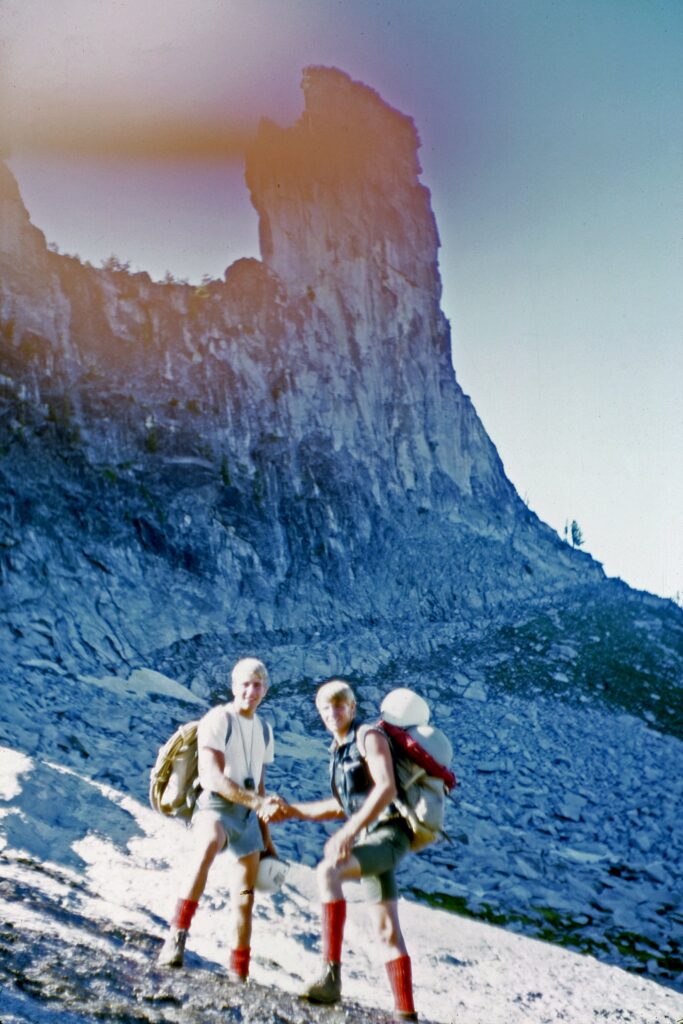
“We were both athletic, driven, and enjoyed each other’s company,” he said. “When it came to needing a compatible partner for the type of climbs we were both good at, then we’d team up together.”
Over decades of their remarkable adventures together, the mountaineers resemble brothers more than climbing partners. But like brothers, they had a few disagreements early in their relationship, Roskelley said. These primarily concerned the type of risks each was willing to take.
“[Kopczynski] was more careful on his choice of routes, while I sought out harder, more difficult challenges at times,” he said. “But we were comfortable in our own skin and not jealous of each other’s success.”
Scaling Orton Hall
Kopczynski’s memories of attending WSU are powerfully vivid. As a freshman in the fall of 1966, he decided to climb the newly constructed Orton Hall under cover of darkness, choosing a route up the concrete latticework on the building’s south exposure.
“I made it to the top and watched a stunning moonrise over the Palouse hills, then went down the elevator machine room stairwell,” he said. “This was my introduction to the beauty of the Palouse hills.”
Kopczynski was on WSU’s varsity wrestling team all four years. Then, wrestling was a minor sport; however, through WSU, he competed on a national level, something he said he would be eternally grateful for. The team visited every college in the Pac-8 Conference and every minor college in the Pacific Northwest.
“Training and working out at Bohler Gym for about three hours in the late afternoon during the winter months and walking back over the hill to Stephenson North cafeteria with the Bryan Hall clock tower lit up and chiming was a beautiful, peaceful, unforgettable memory,” he said.