Celebration of Hirahara Endowments Planned August 17 in Terrell Library
WSU Libraries will hold a reception and program at 3 p.m. Monday, August 17, in the Terrell Library atrium to celebrate two endowments established by Patti Hirahara of Anaheim, California, daughter and granddaughter of two men who documented daily life in the Heart Mountain incarceration camp in Wyoming for three years during World War II.
Hirahara donated their over 2,000 images and other items to the libraries in 2010, forming the George and Frank C. Hirahara Photograph Collection, 1943-1945, considered the largest private collection of photos taken at Heart Mountain. The collection helped launch WSU as a nationwide resource on Japanese American incarceration in the United States, in large part because of Hirahara’s determined efforts to promote it.
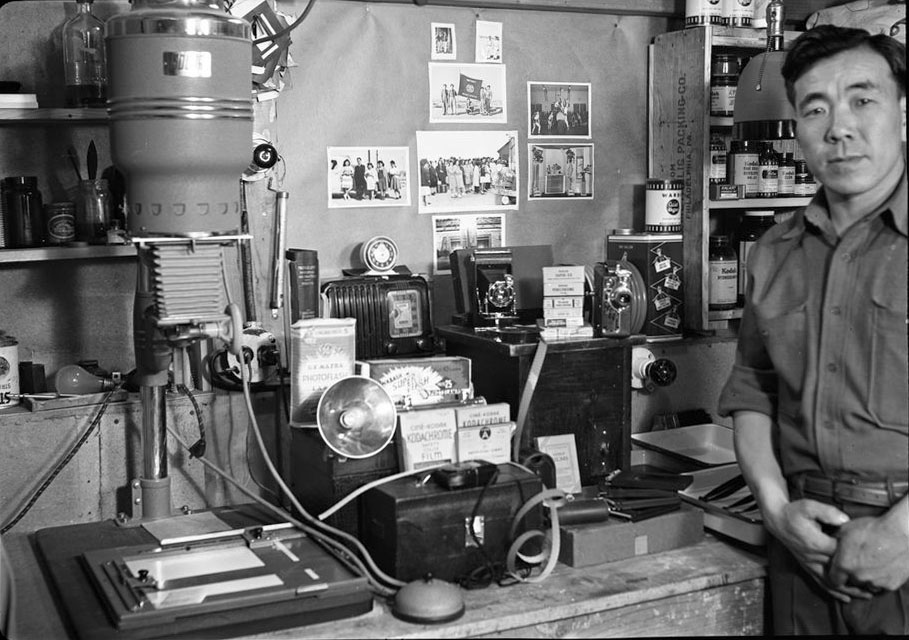
“It is important that we remember our Japanese pioneers and the legacy that they have left for future generations,” she said. “My family’s photographic work has stood the test of time, and as a third-generation photographer myself, I am happy they took the opportunity to record history for all of us to learn what happened over 80 years ago.”
Hirahara later created the Frank C. Hirahara Excellence Fund Endowment, for the collection’s preservation, digitization, and educational programming; and the Patti Hirahara and Terry K. Takeda Legacy Endowment, to support the histories of people of Japanese ancestry, particularly those from the Yakima Valley, and to educate WSU students about Japanese American incarceration and the WSU campus.
Named a WSU Honorary Alumna in 2018, Hirahara continues her work to tell the story of her family’s collection and the significance of WSU in allowing Japanese American students to continue their education during World War II when others were either incarcerated in one of the country’s 10 Japanese American camps or went to study at other educational institutions beyond the military exclusion zone.
Hirahara said she is most proud of the fact that the Hirahara Photo Collection has been one of the most requested photo collections at WSU Libraries and has been shown in Emmy Award-winning documentaries, news pieces, NFL films, and other media. It has also been utilized by the Smithsonian National Museum of American History and the Franklin D. Roosevelt Presidential Library and Museum.
“With this being the work of my grandfather George and my father Frank, who have both passed away, I am happy to promote the Hirahara family legacy of being in the United States for 119 years.”
An established life disrupted
According to a 2012 Washington State Magazine article, Hirahara’s great-grandfather Motokichi immigrated to Washington from Japan in 1907, with wife Sato and son George accompanying him back in 1910. They made their home in the Yakima Valley, farming and selling their crops in Seattle, and later, George owned and ran the Pacific Hotel in Yakima.
Everything changed in 1942 with President Franklin Roosevelt’s Executive Order 9066, authorizing the forced removal and mass incarceration of 122,000 people of Japanese descent, with nearly 70,000 of those being American citizens. The Hirahara family, including George’s teenaged son Frank, were ordered to leave their home and their established lives to join 10,000 others at Heart Mountain.
In 1943, George, Frank, and other internees were allowed to purchase photography equipment, and the Hiraharas built a secret underground darkroom under their barrack apartment. For the next three years, father and son took photos of camp life and special family milestones, such as engagements, weddings, and family portraits.
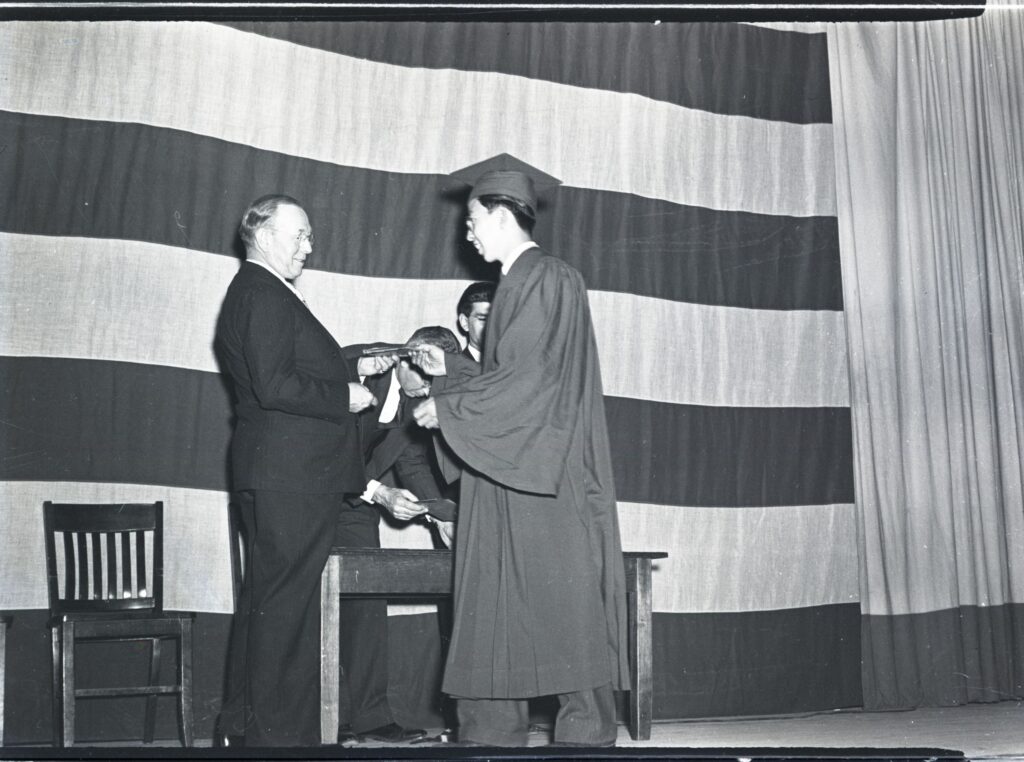
Frank graduated from high school in 1944 while incarcerated at Heart Mountain. Before the war ended, he enrolled at Washington State College, was elected to the Athletic Council in 1946, and graduated in 1948 with an electrical engineering degree. Frank went on to work with the Bonneville Power Administration in Portland, eventually becoming instrumental in the U.S. space program, Hirahara said.
But the 2,000 photos from Heart Mountain remained hidden and unknown until 1992, when Frank asked his daughter to help her grandparents pack their Yakima home to move to Southern California, where she discovered the negatives, photos, and much more. After her father died in 2006, Hirahara found more negatives and photos he had hidden in a closet.
The historic record that George and Frank documented offered a glimpse of the life of incarcerated Japanese Americans at Heart Mountain during World War II, but more importantly, the photos revealed these citizens’ resilience in very dark times.
“[My father] would be so proud to know that his photographic efforts are now part of the WSU Libraries, and he will be remembered by his alma mater and his birth state of Washington for years to come,” she said.
Future collaboration with WSU DTC students
With Hirahara’s most recent donation of $30,000, Digital Technology and Culture (DTC) students in Greg Turner-Rahman’s “Usability and Interface Design” course will work with Hirahara next spring to create a compelling new concept in online presentation. The goal is to create an interactive online museum exhibition highlighting WSU’s Hirahara Photo Collection and George and Frank’s stories.
“The site will discuss their work and their lives in the state of Washington before they were incarcerated during World War II,” said Turner-Rahman, professor and chair of WSU’s DTC program. “We will also share stories about WSU during the war and WSU President Wilson Compton’s pivotal role in the reorganization of Japan’s new education system after the war.”
The website project will be student-directed and built for an international audience, with information in Japanese. Students will explore creative storytelling along with effective web design strategies.
In addition, Turner-Rahman is creating an animated film about Frank and his friend Tom Hide from their time at Heart Mountain, their graduation in 1944, and their years at WSU, where they both became members of the track team. The 30-minute film will be developed with the help of DTC students.