Libraries’ New Synth Lab Opens with Reception Jan. 22
WSU Libraries’ new Synth Lab opens Thursday, Jan. 22, with a reception from 4-5:30 p.m. in the Holland Library first-floor Dimensions Lab, room 120C. The lab for using electronic music production equipment is available to all Pullman students, faculty, and staff.
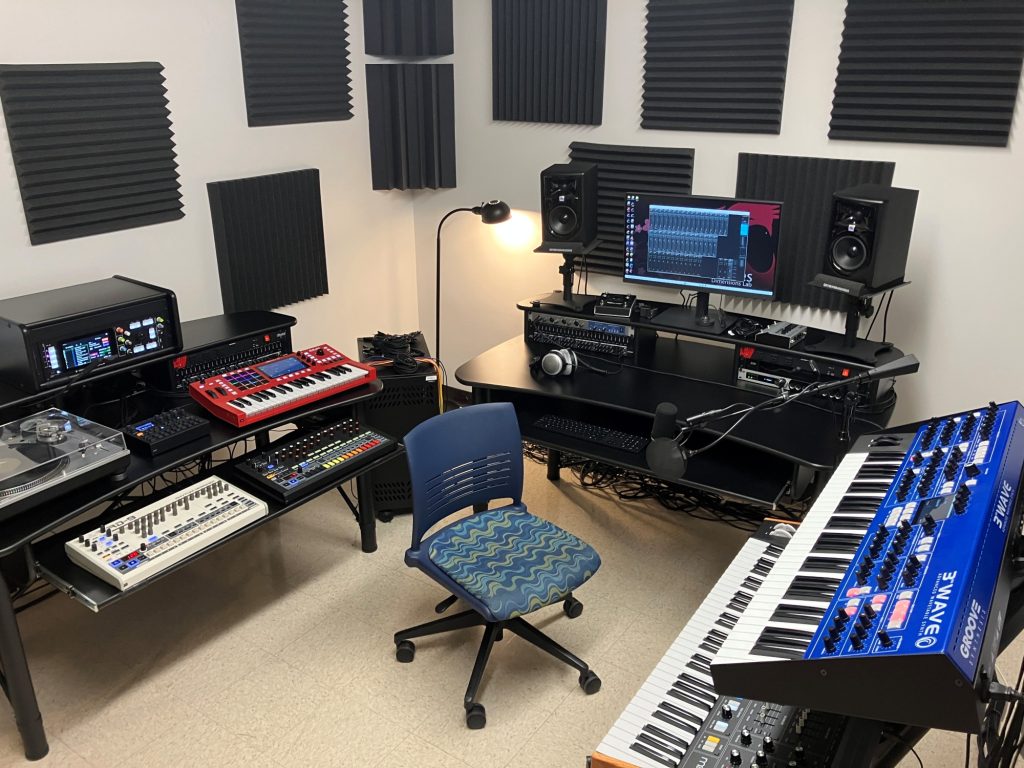
A free, self‐serve library resource that anyone can book, the Synth Lab can be reserved for four‐hour sessions in the same way as the Audio Lab. Patrons are not limited to or prioritized by being affiliated with a department or group. To book the Synth Lab starting Jan. 23, visit the website.
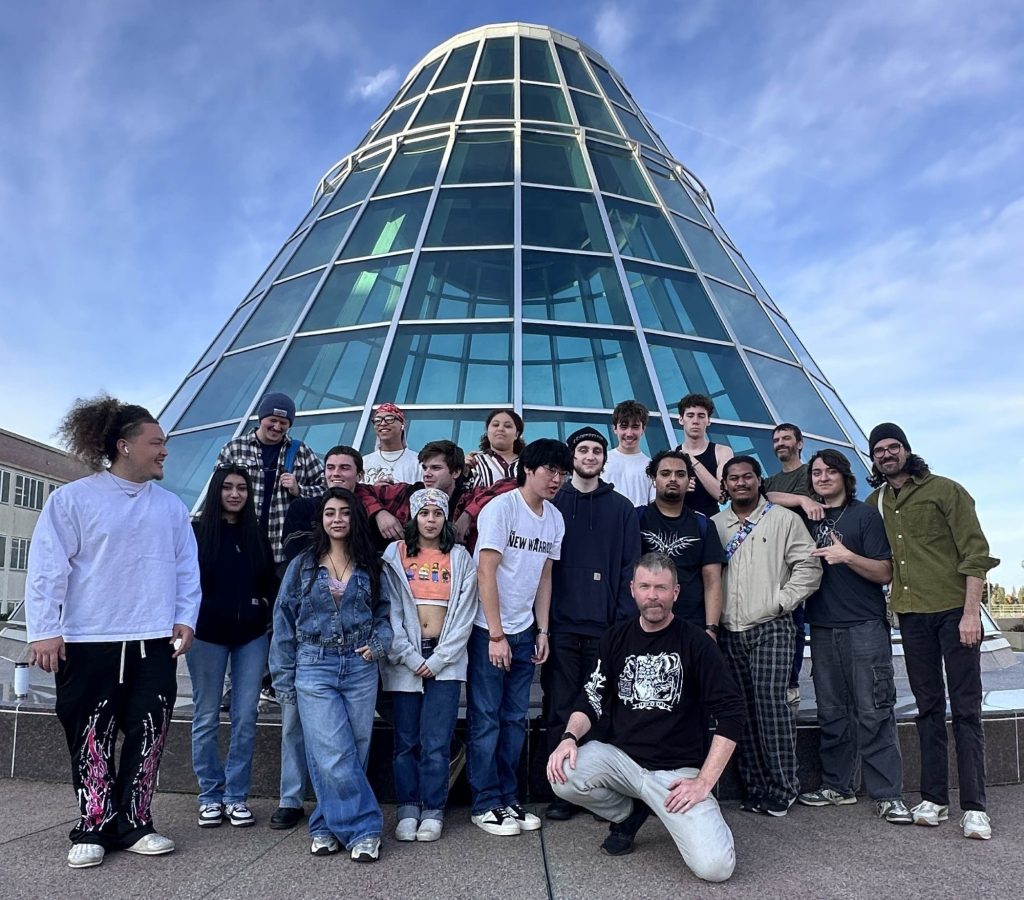
At the reception, members of the WSU Digital Audio Collective (DAC) will introduce the libraries’ latest digital media creation space, speak about the club, and demo equipment, including synthesizers, keyboards, samplers, drum machines, and recording equipment.
After familiarizing themselves with the instruments, DAC members will offer workshops that help lab users understand what equipment is available and how to use it. The group meets weekly in the Dimensions Lab and can help patrons understand recording and sound design processes.
The lab is the culmination of DAC’s efforts to secure $30,436 in funding from the university’s Student Technology Fee Committee, which the collective received just over a year ago. Jason Anderson, DAC’s staff adviser and a WSU Libraries’ Systems employee, said members and non‐members alike can enjoy using physical hardware to produce and record electronic music, offering alternatives to synthesizers and effects plugins on the computer.
“I am incredibly excited to see how WSU students utilize the Synth Lab and hope to see it inspire new ideas and approaches to creating hip hop, EDM, and experimental music,” he said.
The libraries have done this before
In 2022, the WSU Libraries opened the Audio Lab, a state-of-the-art room for the production of podcasts, music recordings, and sound for video. Anderson and library employees established the Whisper Room isolation booth and studio desk, a powerful computer with two displays, and a microphone, stand, and windscreen, in addition to other amenities.
The team also developed the patron booking system. Access Services staff check in and check out users as well as maintain and support the lab.
“This system has continued to be successful since opening the Audio Lab and will only need to be duplicated to make the Synth Lab accessible,” Anderson said. “Having these processes in place has the benefit of making it happen quickly.”
Conveniently, the libraries offered an 11-foot by 15-foot room within the Dimensions Lab that they easily outfitted with acoustics. The Synth Lab also benefits from Anderson, a trained audio engineer and an electronic musician himself.
Going back to the physicality of electronic music
According to the DAC website, early electronic musicians began experimenting with electronic test equipment, tape machines, and record players. During the 1960s and 1970s, innovators such as Don Buchla and Robert Moog invented synthesizers, while Serge Tcherepnin refined them by developing his own system. Technological advancements, including the computer, have expanded the possibilities of electronic music creation.
But computers pose certain challenges. One is that they require an understanding of how to create music within specific software applications, which influences how and what types of music are made. Distraction is also a problem.
“Hardware instruments are devices that serve a specific function limited to music making,” the DAC website explains. “They offer an immediate entry point into music making.”
WSU’s Synth Lab offers a curated set of electronic music instruments essential to the history of electronic music, Anderson said. The devices are newly manufactured clones of older gear or new and improved designs.
“They offer a good bit of historical context with regard to how recording artists have worked with the equipment and how these methods have shaped the music we know today,” he added.
For more information about the Synth Lab, email Anderson.