Indigenous Fishing Rights Collection Now Available for Research in MASC
By Caitlin McKeand, Processing Archivist, Manuscripts, Archives, and Special Collections
A newly processed 31-box collection, the Roberta Ulrich Research Papers, is now ready for researchers and scholars to see in Manuscripts, Archives, and Special Collections (MASC) in the Terrell Library ground-floor office. The collection follows the research materials collected by Roberta “Bobbie” Ulrich, a former reporter who published two books, Empty Nets: Indians, Dams, and the Columbia River (1999) and American Indian Nations from Termination to Restoration, 1953-2006 (2010).
Ulrich graduated from Washington State University in 1950 with a degree in English and a certificate in journalism. Her work covered a variety of diverse topics, and in the last three years of her working life, she began reporting exclusively on Indigenous nations in Oregon, Washington, and Idaho, particularly communities along the Columbia River.
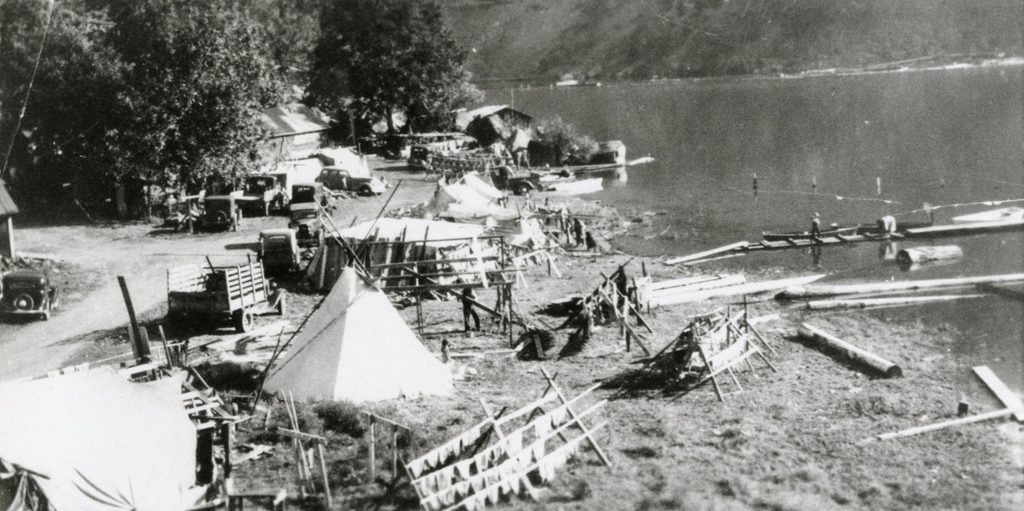
It was during this time that Ulrich developed relationships with the various communities and learned about their culture and history. When Ulrich graduated from Portland State University with her master’s degree, her thesis was about the Indigenous communities. Titled Justice Delayed and published in 1996, the piece covered the relationship between various tribal nations living along the Columbia River and the U.S. government, which later became her first published book Empty Nets.
In 1939, multiple dams were being built all along the stretch of the Columbia River Basin, including Bonneville Dam. As a result of the dams’ construction, sacred Indigenous fishing sites and burial places were flooded. The U.S. government promised the communities that their fishing sites would be replaced (also referred to as in-lieu fishing sites). What followed was a 60-plus-year battle by the tribal nations to hold the government to its promise to provide in-lieu fishing sites.
Ulrich’s second book, originally drafted as A Lot of Funerals, later published as Termination to Restoration, covers Congress’s ending of federal recognition for 90 tribal nations. Later in 1973, many of them fought to be recognized again by the government.
The papers are organized by topic and year, allowing for a quick search of tribal names and the ability to track by year the sections of Ulrich’s research that correspond to her publications. Further series cover drafts of her work, interviews conducted, and the physical media associated with her interviews and photographs.
This collection has invaluable information for researchers, scholars, and future authors interested in the Native American nations along the Columbia River, Indigenous fishing rights, and government involvement with the dams.
For more information about the Roberta Ulrich Research Papers, please email MASC Processing Archivist Caitlin McKeand. MASC is open Monday through Friday from 9 a.m.–4:30 p.m. No previous reservation for visiting is required.