National Farmworker Awareness Week Display Highlights Nash Collection Photos
A display and slideshow of migrant worker photos from a Washington State University Libraries collection are part of recognition events for National Farmworker Awareness Week (NFAW) March 25-31, sponsored by the WSU College Assistance Migrant Program (WSU CAMP).
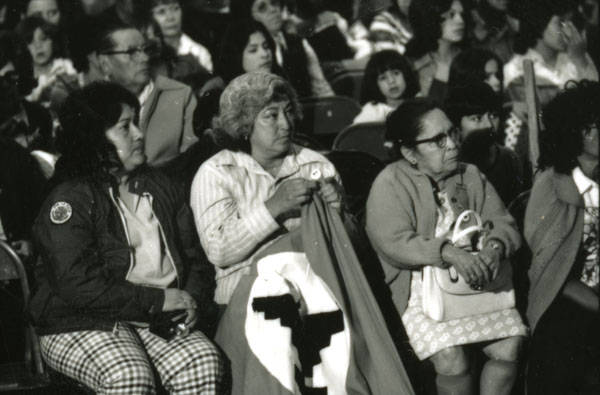
WSU’s Manuscripts, Archives, and Special Collections (MASC) will open the Terrell Library ground-floor reading room for visitors to see selected images from the Irwin Nash Collection, photos of Yakima Valley migrant workers taken by the Seattle photographer between 1967-1976. The display, titled “La Causa: Labor Activism in the Yakima Valley in the 1960s and 1970s,” runs during the awareness week from 9 a.m.-4:30 p.m.
According to its website, NFAW is a week of action for university students and community members to honor farmworkers’ important contributions and to raise awareness about the issues they face. It is coordinated by Student Action with Farmworkers (SAF), a nonprofit organization started in 1976.
MASC interim head Lotus Norton-Wisla met with Elizabeth Mariscal, WSU CAMP academic adviser and recruiter, after Mariscal learned about a past exhibit MASC created in 2022 on the history of labor activism by farmworkers in the Yakima Valley, featuring Nash’s photographs. WSU’s Jordan Schnitzer Museum of Art also featured the photography collection in another exhibit later the same year. Lipi Turner-Rahman, former libraries’ development director, curated both exhibits.
Norton-Wisla and Mariscal collaborated on the table display and slideshow featuring elements of the 2022 MASC exhibit and select Nash photos for the Pullman campus NFAW commemoration. MASC is also displaying related records that show connections at WSU from the same time period. Drew Gamboa, a MASC employee and WSU history doctoral student, created the slideshow, and Caitlin McKeand, MASC processing archivist, selected additional materials from ASWSU records.
WSU CAMP is sponsoring other Pullman campus events during NFAW and later, including a blood drive Thursday, March 26; a Bandana Project event on Tuesday, March 31; a keynote address by SAF executive director Sylvia Zapata on Thursday, April 2; and clothing/food drive boxes at various locations around campus for the next couple of weeks. For details, email Mariscal.
“With this contribution to the week on campus, I hope visitors will gain an awareness of the history of the lives of farmworkers in Washington, and their efforts to improve working conditions that were documented by a photographer with a mission to bring awareness to the struggles of farmworkers,” Norton Wisla said. “I hope people come to know a little bit more about the farmworkers, families, leaders in labor organizing, supporters in solidarity with the cause, and members of Yakima Valley communities from history all the way to today who deserve recognition, dignity, and respect.”
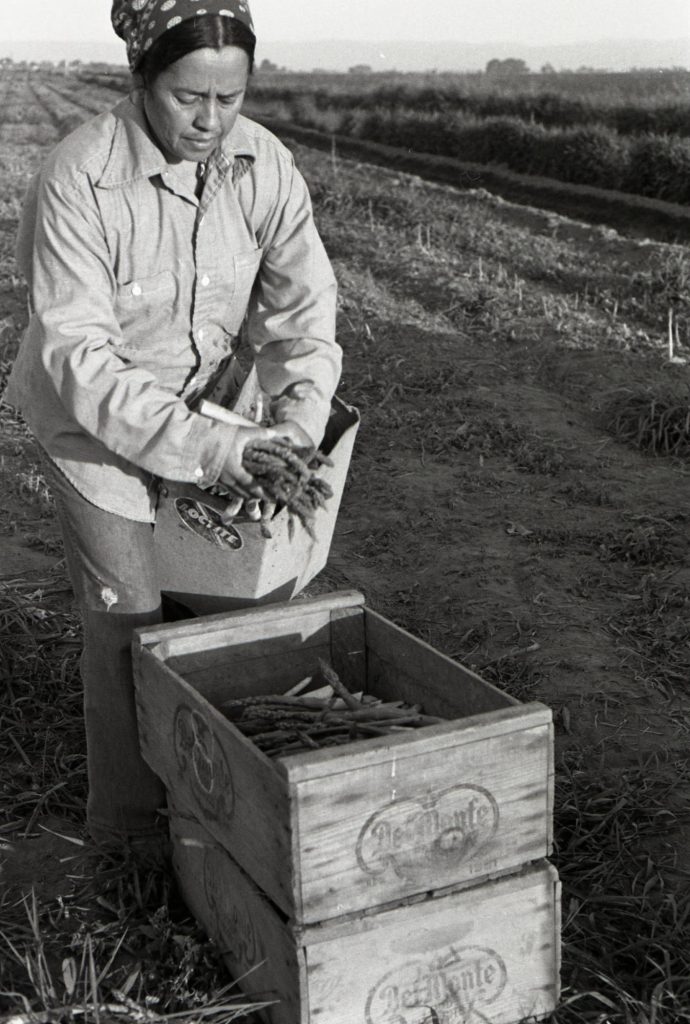
One of the Nash images selected by Mariscal for the NFAW display is the photograph “Elisia Elizondo cutting and harvesting asparagus.” For decades after Nash took the photo in 1972, Elisia was just listed as “mother harvesting asparagus” until 2020 when WSU Libraries, Turner-Rahman, and Laura Solis, Elisia’s great-niece, began work on digitizing almost 9,500 of Nash’s photos.
Adam Elizondo, Elisia’s grandson, recognized his grandmother in the photo and wrote a tribute to her on the digital photo record.
“Because of her, my life is better; because of her, I know why family matters; because of her, I am who I am,” Adam wrote. “Because of her, I live with humility and respect for those who showed me the way and endlessly sacrificed for their families. Because of her, I will always value the little things in life that she worked so hard for every early morning and long hot day.”
About national CAMP and WSU CAMP
CAMP is a federally funded program that helps first-year students from migrant and seasonal farm-working backgrounds transition to college each year. The program provides academic advising, team building, financial planning, and social activities as part of a comprehensive strategy to promote student success.
WSU CAMP, started in 2006, was named as an Example of Excelencia in 2024, the highest recognition given by one of the nation’s leading Latine education organizations. Last year, WSU CAMP was selected by the National Association of Student Personnel Administrators (NASPA) to receive its Gold Excellence Award and Grand Bronze Award. NASPA is one of the nation’s leading organizations for student affairs professionals and administrators in higher education.