‘Both Feet In’: WSU Press Thrives through Library Support after 2024 Move
Brian McManus, Amy Thielen, and Libby McKeighen conducted a tour just after the new year to highlight the mailing operation in place for sending out WSU Press book orders. Access Services only assumed the shipping responsibilities that used to be handled through Cooper Publications Building in November. Now the mailroom is one well-organized room of the Terrell Library basement.
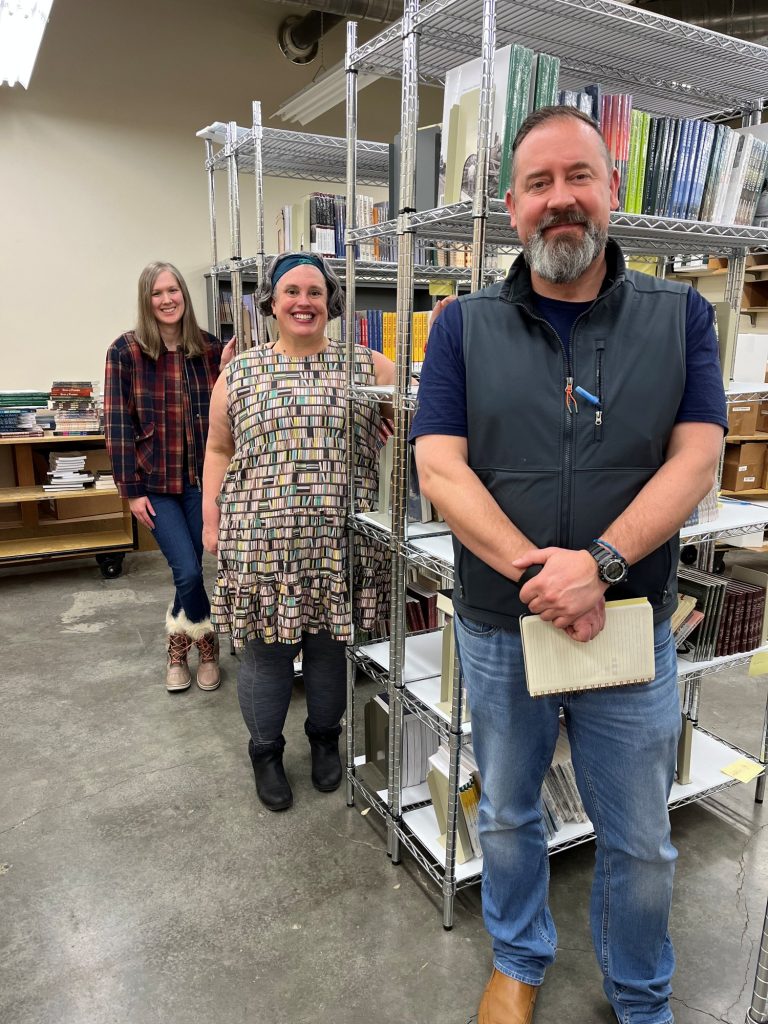
The three colleagues all have a part in the process. McManus, department manager, handles the inventory list; books are pulled from the shelves; Thielen and McKeighen, both library and archives paraprofessionals, match books to orders; and the volumes are packaged, labeled, and mailed. The team guessed that during the busy holiday season, they sent out 30 packages of WSU Press book orders a week, but on average, that number is between 15-20 a week.
Having Access Services mail WSU Press books makes sense. The department already mails interlibrary loan books to patrons daily, and McKeighen has had quite a bit of experience there.
“I am the maven of the mailroom,” she said.
All of them talk universally about wanting to support the press and see it succeed at its new home in the WSU Libraries. In the fall of 2024, WSU Press came to Holland and Terrell Libraries in uncertain times, facing the end of its nearly 100-year existence after a difficult budget scare.
McManus anticipates many orders will be going through Access Services until the new book distributor, Longleaf, takes over sometime this spring. In addition, a new WSU Press Bookshop is opening at the Terrell Library circulation desk, which will put more titles in the hands of patrons at a convenient location in the heart of the Pullman campus.
These accommodations take work and adjustments for Access Services, but McManus says it’s worth it. “We’re both feet in. We have a high amount of pride in helping the press.”
Developing a self-sustaining press
Jenny Yoshikawa, WSU Libraries’ director of administrative services and area finance officer, faced the first important hurdle with the press’s new move: Can this be done financially so that the press is self-sustaining within the libraries? She said the press has successfully made that transition, with support for personnel provided by Provost Chris Riley-Tillman.

The change increased efficiency through shared financial staffing, streamlining processes, and improving financial oversight, Yoshikawa said. To generate revenues, the libraries have integrated press sales and shipments into their own existing shipping workflows.
“Furthermore, since the libraries and the press share a mission to advance the university’s research and teaching, we aim to host more events in the library that will showcase WSU Press books and authors,” she said.
Having a university press that is nearly a century old is something that makes WSU special, said Trevor Bond, WSU Libraries’ dean. WSU Press publishes books that make unique contributions to an understanding of the Northwest.
He also looks forward to the new partnership with Longleaf for printing services and distribution. The company’s robust online ordering and inventory systems will make operations much more sustainable, and the press can focus on the intellectual work of publishing amazing books.
“I am grateful to all of my colleagues who are invested in the success of the press,” Bond said. “As academic libraries evolve, I am tremendously excited that the WSU Press has expanded our purview into academic publishing. In the coming years, my hope is to raise the visibility of the WSU Libraries and the WSU Press.”
A bookshop in a library?
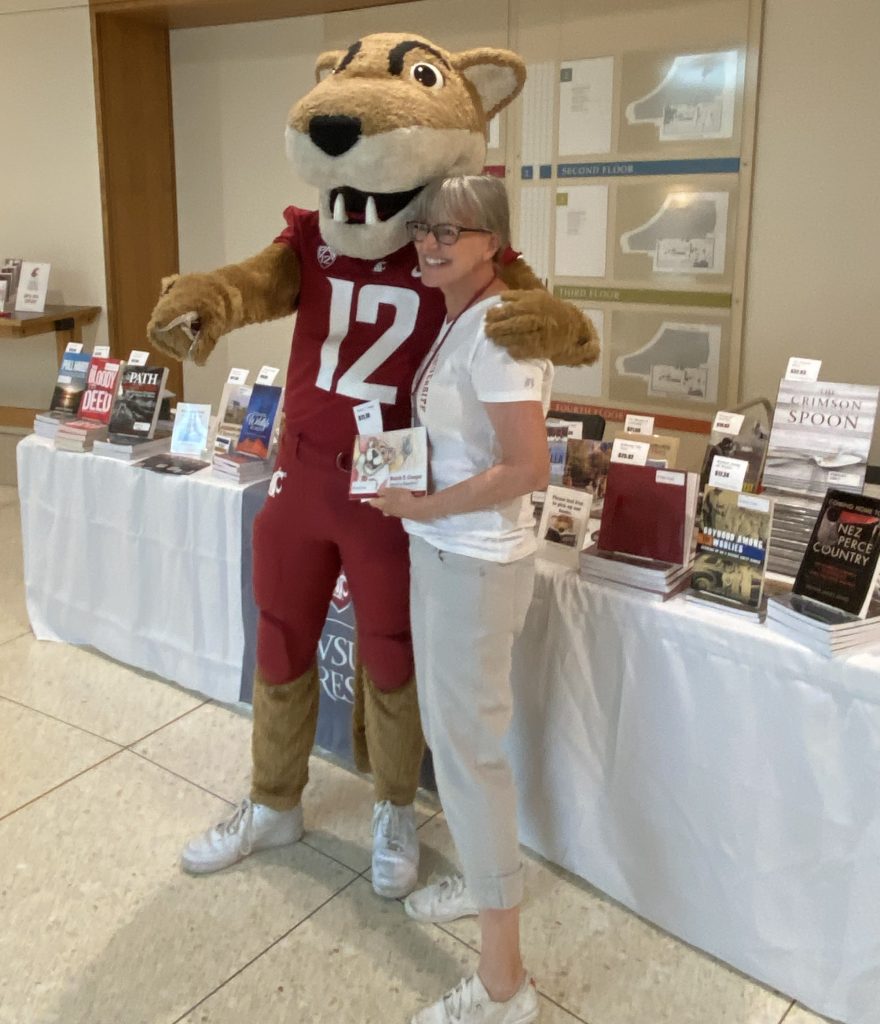
Another part of its revenue-building strategy is opening the WSU Press Bookshop this semester. Director Linda Bathgate said she’s been seeking ways to improve the visibility and accessibility of WSU Press and its publications in the WSU community, especially as very few of them are stocked in The Bookie. Selling them at the Terrell Library circulation desk will go a long way toward that goal.
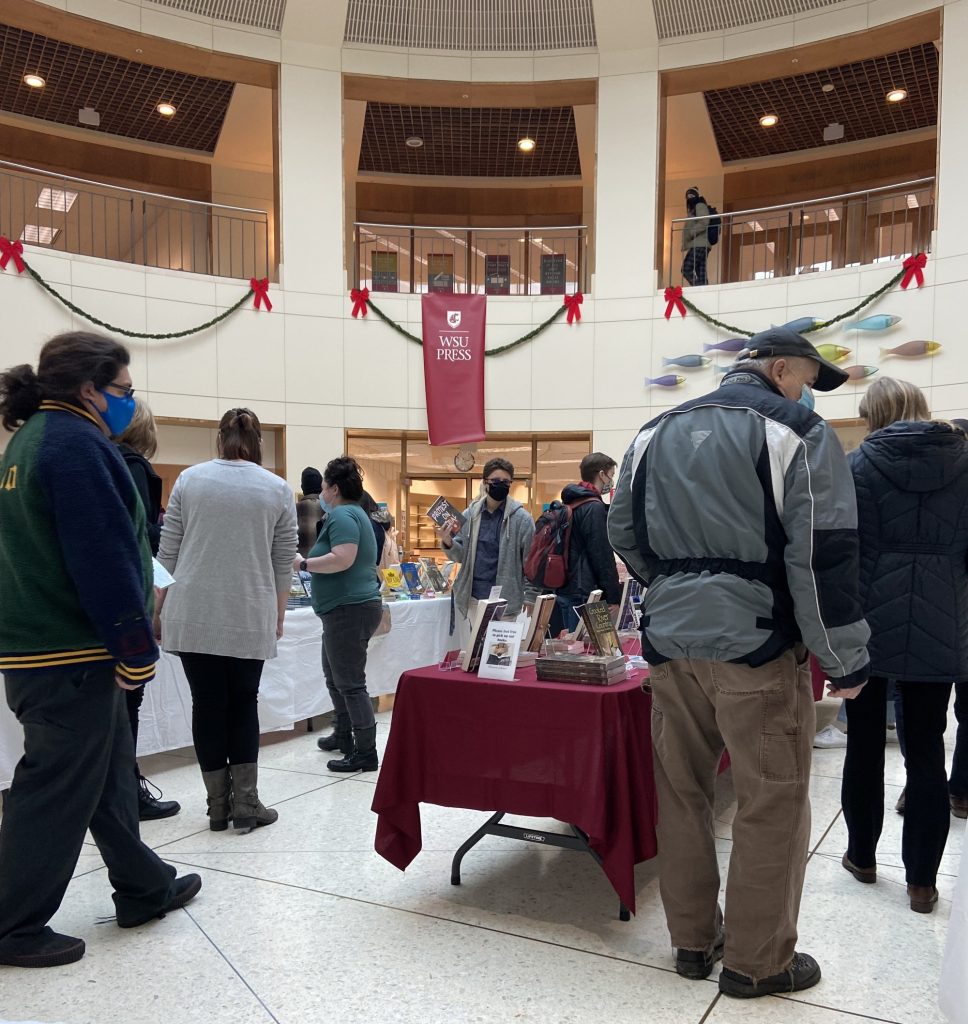
“We have done pop-up shops during Family Weekend, Homecoming, First Down Fridays, and other events, but it makes sense to establish a sales venue to make our books available locally on a consistent basis,” she said.
Bathgate plans to focus on stocking the more popular and readable titles for the bookshop initially. But with all available press titles now being moved from Cooper Publications Building to Holland Library’s basement compact storage, customers can purchase any of the titles that the press distributes.
“Our children’s books Butch T. Cougar and Butch’s Game Day will be well stocked, as well as new titles as they publish, but I also want to put some of our classic titles in front of new readers, such as the true-crime story This Bloody Deed, the regionally focused cookbook Wandering and Feasting, and the natural history title Native River, which surveys the Columbia River before the dams were built,” she said. “I anticipate having sales and promotions alongside WSU events and holidays as well. It will hopefully become a permanent pop-up shop.
“Ultimately, the bookshop will demonstrate that WSU Press is publishing books of great relevance and interest to the WSU community, in support of WSU’s land-grant mission and the wide dissemination of knowledge about this unique part of the world,” Bathgate added.
The second big move
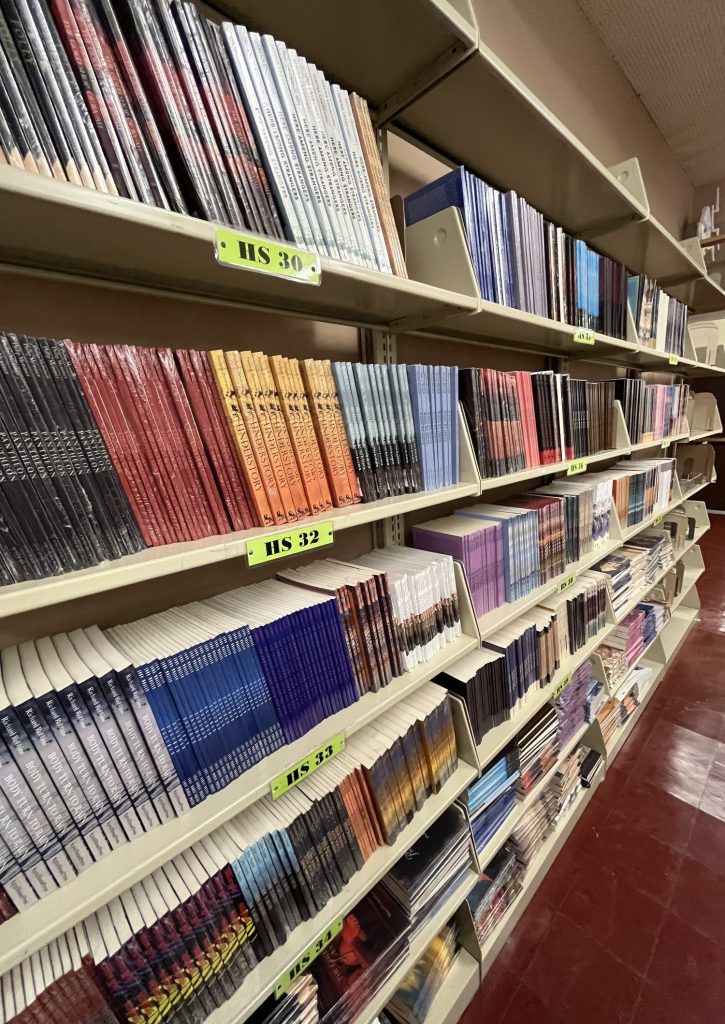
If you want to know what persistence and grit look like, talk to Alan Fey, the libraries’ building coordinator. He and others from Access Services, including McManus and student workers, moved 5,812 boxes of WSU Press inventory to Holland Library since October. Fey is moving the last of the remaining books from Cooper Publications Building as of this week.
“It was a marathon,” he said. “I just take it steady.”
Bringing the press’s inventory to the same place where books are shipped ensures the orders are picked, packed, and shipped within a few days of receipt, sometimes the same day.
Holland’s fourth floor houses the WSU Press poetry titles. Bathgate and Yoshikawa took on the job of shelving them before the holidays. The entire press inventory was supposed to be there as well, Fey said, but it quickly became apparent that there wasn’t enough space.
The basement compact-storage area fit the bill. Mobile shelves on wheels collapse together so more books can be stored in a smaller space. Fey estimates that the one small area of the Holland basement will hold 33 rows of shelves.
Even with his previous inventory management experience, Fey said he didn’t expect the enormity of the moving and storage project. “I didn’t think I would need [that experience] here.”
More change to come: a new book distributor
Longleaf will have warehouse space for the book inventory in the future, as well as providing order management and customer service, Bathgate said. WSU Press has managed its inventory, orders, and fulfillment operations throughout its entire history, but with staff reductions and an obsolete software system, choosing a book distributor became a necessity.
Bathgate and library administrators chose Longleaf in part because of its relationship with Ingram, the largest U.S. book wholesaler that represents much of the press’s annual business, she said. Longleaf uses Ingram warehouses, so the books will be housed with the entity placing the largest orders of WSU Press titles.
Longleaf is also a nonprofit and collaborates with its partner presses on various publishing efforts.
“Having worked with over 20 presses to transition to their systems, Longleaf will help us prepare for the transition and manage the inventory transfer,” Bathgate said. “It is going to be a significant change to how we do business, but it also frees up our time to be more strategic in our publishing activities.”